The 8 Best RF Modulators
Updated by · How we research

Analog channel 3/4 boxes need a TV with an analog tuner. Eight RF modulators, analog and digital, for CRTs, retro consoles and coax; the AoeSpy RF61M01B leads. When users buy our independently chosen editorial choices, we may earn commissions to help fund the Wiki.
A classic channel 3 modulator only shows up on a TV with an analog tuner. Tube sets have one, and many newer sets still do, Roku TVs among them, but some recent TVs tune only digital channels and need a digital modulator. These boxes suit retro gamers, VCR and DVD fans with coax-only sets, and anyone sending one source to several rooms over coax.


From the manual
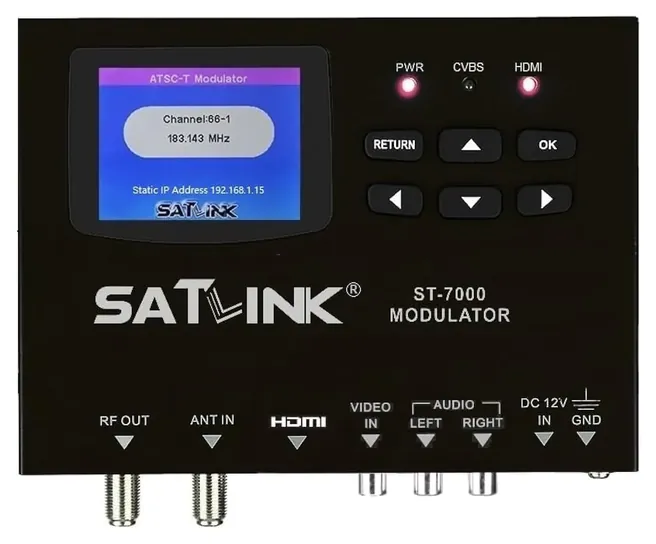
- It shows only HDMI video free of HDCP copy protection, and a laptop's PC-style HDMI output isn't supported without a converter box. pp. 14, 21
- Set the source to a fixed 1080p or 720p output and plug it in directly; some HDMI switches don't pass the resolution data it needs. pp. 6, 21
- If sound skips or stutters, set the source to plain PCM stereo instead of Dolby or other compressed audio. p. 21
- It carries a two-year limited hardware warranty and 90 days of free software updates, loaded from a PC over its mini USB port. pp. 2, 20
Editor's Notes
November 16, 2026, by Ezvid Wiki Editors:
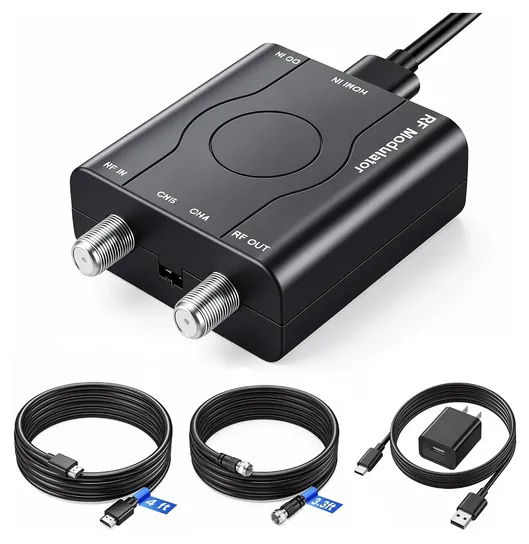
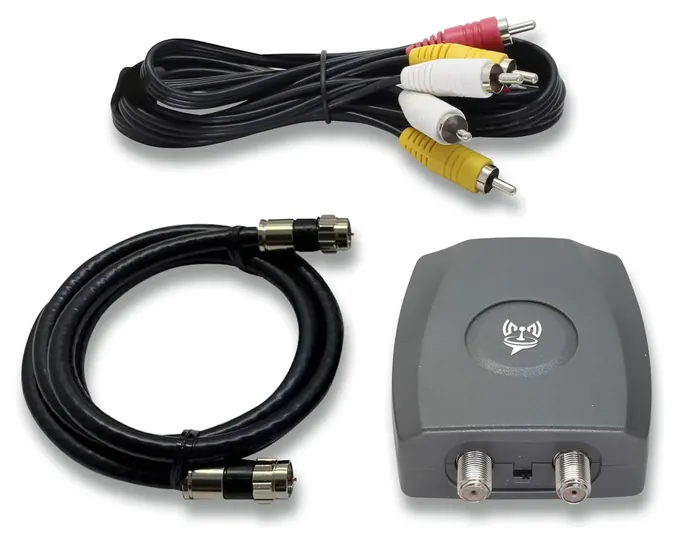
We added two boxes: the kurtmark HDMI to RF Modulator, which ships with HDMI and coax cables and a power adapter, and the SatelliteSale RF Modulator, whose seller promises a lifetime warranty but posts no terms. The six earlier picks are still sold and fresh CPSC searches found no recalls, so their order stands. We also corrected the claim that most recent TVs tune only digital channels (Roku TVs still offer analog channels 3 and 4) and the advice that a splitter keeps a modulator's signal off the cable line.
November 5, 2026, by Ezvid Wiki Editors:
We read SatLink's ST-7000 start guide and added its setup traps, copy-protection limit and warranty under that pick, and noted Cimple's ten-year replacement warranty. We fixed a citation that pointed to a Wikipedia disambiguation page, stopped calling a seller's listing a maker spec sheet, and rewrote the methodology to name what we read.
October 19, 2026, by Ezvid Wiki Editors:
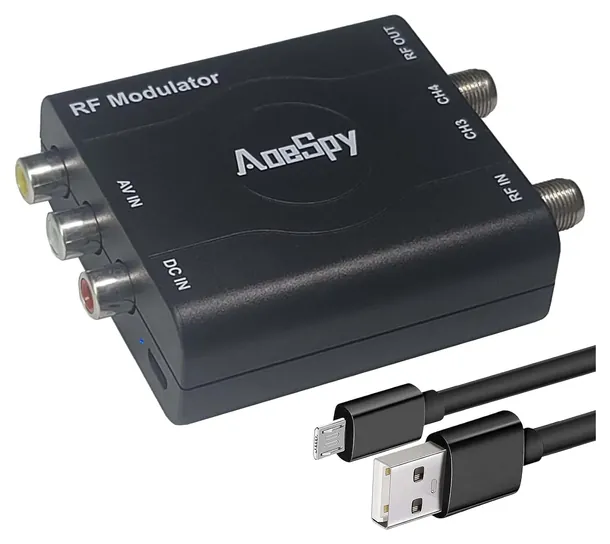
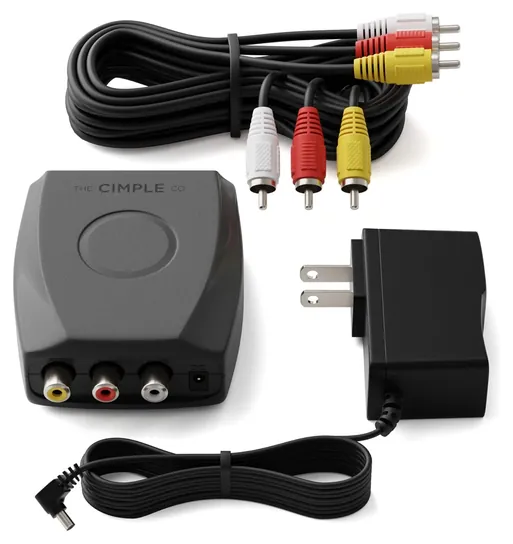
The AoeSpy RF61M01B leads this new page because it does the core job, composite video in and channel 3 or 4 out, for very little, with an antenna pass-through and steady owner feedback. The Cimple Co CMP-RFMOD-RCA is the easiest pick for a second TV, but a run of units dying within months kept it from leading.
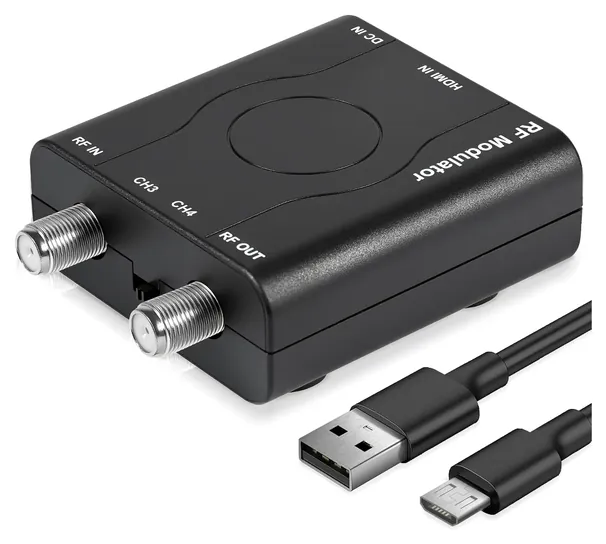
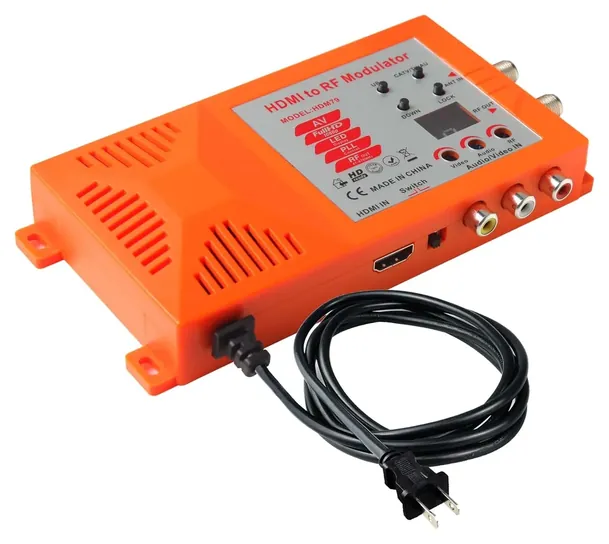
The list covers both kinds of modulator. Most are analog boxes for tube TVs and retro consoles, including the VQP HDM61 for HDMI sources. The SatLink ST-7000 is here for anyone whose TV has only a digital tuner, which an analog box can't reach.
Nobody seems to publish lab tests of these boxes, so we leaned on published channel frequency tables, the digital TV rules that decide which sets can tune each box, and patterns in owner feedback. We left out a blue HDMI box that duplicates the ADRFClub HDMI/RCA Modulator, a stack of look-alike composite boxes with weaker feedback, and an eight-channel rack unit priced for professional installers.
Special Honors
Thor Broadcast Thor Broadcast, based in Torrance, California, sells trade-grade cable TV gear, including HDMI-to-digital modulators that put many sources on one coax network for hotels, schools, casinos, sports venues and houses of worship. It's the route for a building-wide system with support behind it, rather than a single box for one TV. thorbroadcast.com
Do You Need An RF Modulator?
None of them takes a coax signal and turns it into RCA video; that job needs a tuner, such as a VCR or a converter box with composite outputs.
An RF modulator turns the video and sound from RCA jacks, or HDMI on newer boxes, into a TV channel that travels over coax, the same way an antenna signal does. The TV tunes it like a station. VCRs, early game consoles and home computers used them because many TVs of the era had only an antenna jack (Wikipedia: RF modulator).
If your TV has any yellow composite, component or HDMI input, skip the modulator and connect directly. Squeezing video into a broadcast channel and back softens the picture, and most cheap boxes send mono sound. For a modern TV with only HDMI, an AV-to-HDMI converter is the better route for an old console. For a newer HDMI source and an older TV with RCA jacks, use an HDMI-to-composite converter.
Modulators only work one way. None of them takes a coax signal and turns it into RCA video; that job needs a tuner, such as a VCR or a converter box with composite outputs.
Analog Channel 3/4 Or Digital ATSC And QAM
In North America, the cheap boxes put out an analog NTSC signal on channel 3 or 4. Those two channels were rarely both used in one area, so you pick whichever is empty where you live (Wikipedia: RF modulator). Some boxes, like the ADRFClub, add dozens of VHF and UHF channels and the PAL format used in much of Europe and Asia.
The catch is the TV. Full-power U.S. stations stopped analog broadcasts in 2009 (Wikipedia: Digital television transition), but plenty of newer sets still tune analog: Roku TVs, for one, offer to add channels 3 and 4 during antenna setup for VCRs and game consoles (TCL: Roku TV antenna setup). Some newer TVs ignore analog channels entirely (Thor Broadcast: analog vs digital modulators), and an analog modulator shows nothing on them. For those you need a digital modulator that outputs an ATSC channel, the U.S. over-the-air standard (Wikipedia: ATSC standards), or a QAM channel, the format digital cable uses (Wikipedia: QAM). Set the TV's scan to match: antenna for ATSC, cable for QAM. Digital boxes can also be strict about the source: the SatLink ST-7000 shows only HDMI video free of HDCP copy protection (start guide, p. 14), so check that your player can send unprotected video.
Digital units cost roughly ten times what an analog box does. Multi-channel rack models, like the StarMax MX-800R, which takes up to eight HDMI sources (StarMax MX-800R user guide), serve whole buildings and are usually set up by an installer.
Sending One Source To Several TVs
A modulator is the cheap way to put one DVD player, security recorder or streaming box on every TV already wired with coax. Run the modulator's output into a splitter and the splitter's outputs to each room. If you also want antenna channels, feed the antenna into the modulator's RF input so both share the line, and pick a channel no local station uses.
Each split cuts the signal. An ideal two-way splitter sends half the power to each port, and real ones lose a bit more (Wikipedia: Power dividers). Consumer modulators are weak, so after three or four splits, or a long run, add a cable amplifier.
Keep the modulator on your own wiring. Never connect its output to an outdoor antenna or to the cable company's incoming line, where it can leak into the provider's network and interfere with service. FCC rules require these devices to be built, as far as practical, so the output can't be attached to a receiving antenna by accident (47 CFR 15.115). A splitter won't keep the signal in, because splitters also work in reverse as combiners (Wikipedia: Power dividers). A separate coax run that never joins the incoming cable line avoids the problem.
How we researched this
We compared 15 RF modulators, analog and digital, kept six in October and added the kurtmark and SatelliteSale boxes in a November 2026 recheck. The only maker manual we found online for any pick is SatLink's ST-7000 start guide (v1.3, April 2021); for Cimple Co we read its product page and ten-year warranty, for SatelliteSale its store page and return policy, and for the other five only sellers' spec lists and listing photos. Wikipedia's RF modulator, ATSC and power divider pages, TCL's Roku TV antenna setup page and the FCC's TV interface device rule (47 CFR 15.115) shaped the advice. CPSC recall searches on November 5 and 16, 2026 for "modulator" and every brand on the list found none.
Sources (16)
- Wikipedia: RF modulator
- Wikipedia: Digital television transition
- Wikipedia: ATSC standards
- Wikipedia: Quadrature amplitude modulation
- Wikipedia: Power dividers and directional couplers
- Thor Broadcast
- U.S. Consumer Product Safety Commission: SaferProducts.gov
- SatLink ST-7000 Series start guide v1.3 (PDF)
- StarMax MX-800R user guide (PDF)
- The Cimple Co: RF modulator product page
- The Cimple Co: 10-year limited warranty
- eCFR: 47 CFR 15.115, TV interface devices
- TCL: How to set up an external antenna on a Roku TV
- Thor Broadcast: Analog vs digital HDMI RF modulators
- SatelliteSale: RF modulator product page
- SatelliteSale: return policy
Frequently asked questions
Do I need an RF modulator?
Only if your TV has just a coax or antenna jack, or you want to send one source to several TVs over coax. If the TV has composite, component or HDMI inputs, a direct connection gives a better picture.
What does an RF modulator do?
It turns video and sound from RCA or HDMI jacks into a TV channel on coax, usually channel 3 or 4. You tune the TV to that channel to watch.
Does an RF modulator work in reverse?
No. It only turns AV or HDMI into coax. To get RCA video out of a coax signal you need a tuner, such as a VCR or a converter box with composite outputs.
Will an RF modulator work with a new TV?
Only if the TV still has an analog tuner. Tube sets do, and many newer sets do too; Roku TVs offer channels 3 and 4 during setup. TVs with digital-only tuners need a digital ATSC or QAM modulator, which costs much more.
Can I connect an RF modulator to my cable line?
Not to the incoming line from the cable company, where its signal can leak into the provider's network. A splitter won't stop that, since it passes signals both ways, so keep the modulator on a coax run that isn't joined to the provider's line.
Channel 3 or channel 4: which should I use?
Pick whichever one has no local station where you live. If you see interference or a faint second picture, switch to the other.